Halloween 2026: Spending, Top Costumes and Safety Tips
Americans are set to spend $13.5 billion on Halloween 2026. The top costumes for kids, adults and pets, plus official trick-or-treat and candy safety tips.

The short answer
Halloween falls on Saturday, Oct. 31, 2026, and U.S. consumers are expected to spend $13.5 billion on it, up from a record $13.1 billion in 2025, according to the National Retail Federation's annual survey. About 74% of Americans plan to celebrate, spending an average of $115.14 each. Spider-Man tops kids' costumes and witches top adults'. Federal agencies recommend flame-resistant, reflective costumes, inspecting candy before eating it and avoiding non-prescription colored contact lenses.
Key takeaways
- Total spending: $13.5 billion expected in 2026, vs. a record $13.1 billion in 2025 (NRF).
- 74% of consumers plan to celebrate; average spending is $115.14 per person.
- Top costumes: Spider-Man for kids (4.6 million), witch for adults (4.8 million), pumpkin for pets.
- Costumes ($4.4 billion), decorations ($4.3 billion) and candy ($4.1 billion) are the biggest categories.
- Safety: flame-resistant, bright costumes; makeup instead of masks; inspect candy at home; no colored contacts without a prescription.
In this article
Halloween lands on a Saturday this year, Oct. 31, 2026, and Americans are ready to spend. U.S. consumers are expected to spend $13.5 billion on the holiday, according to the National Retail Federation's annual survey, keeping pace with last year's record $13.1 billion. Searches for "Halloween 2026" are climbing on Google Trends, where the trend "Heidi Klum," with related searches for "Halloween" and "Halloween 2026," passed 20,000 this weekend. Here is a guide to what people are buying, the most popular costumes and the official safety advice for the night.
What we know
The NRF survey, conducted by Prosper Insights & Analytics, asked 7,889 consumers about their plans from Sept. 1 to 9 and has a margin of error of plus or minus 1.1 percentage points. Key findings:
| Measure | 2026 | 2025 |
|---|---|---|
| Total expected spending | $13.5 billion | $13.1 billion (record) |
| Average spending per person | $115.14 | $114.45 |
| Share planning to celebrate | 74% | 73% |
| Shopping in September or earlier | 49% | About the same |
Source: National Retail Federation.
"Consumers continue to make Halloween a spending priority, but they are also approaching the season with affordability in mind," said Allison Zeller, NRF vice president of industry and consumer insights.
Participation has stayed above pre-pandemic levels: only 68% of consumers planned to celebrate in 2019, NRF said. The most popular ways to mark the day are handing out candy (61%), dressing in costume (50%), decorating (42%), carving pumpkins (42%) and watching scary movies (42%).
Where the money goes
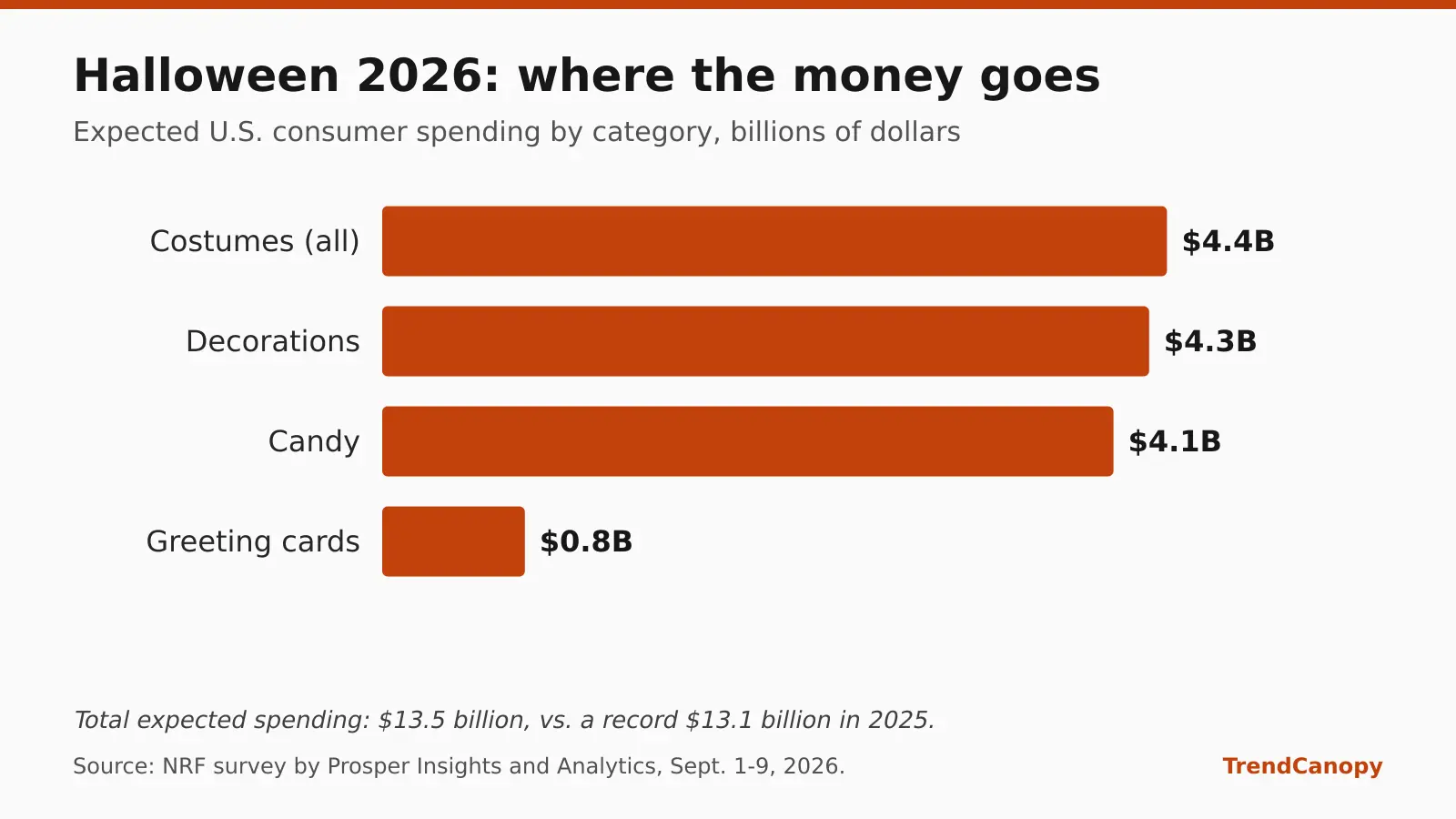
Candy is the most common purchase, with 96% of shoppers planning to buy it ($4.1 billion). Decorations (78% of shoppers, $4.3 billion) and costumes (71%, $4.4 billion) follow. Greeting cards are more popular this year, at 42% of shoppers, up from 38%.
Discount stores (39%) are the top place to shop, followed by specialty Halloween and costume stores (32%) and online (27%). Shoppers are also watching costs: if prices are higher than expected, 31% say they will comparison shop, 26% will look for coupons or sales, and 34% plan to buy items they can reuse. Nearly half (47%) are using AI tools to help plan, NRF found. Online searches remain the top source of costume inspiration (32%), though that share is the lowest in a decade, and 13% of shoppers plan to buy from local and small businesses, almost double the 7% of 2016.
The most popular costumes of 2026
NRF's rankings show superheroes and classic monsters still rule:
- Kids ($1.5 billion): Spider-Man (4.6 million children), superhero (2.3 million), princess (2.2 million), witch (1.6 million) and ghost (1.6 million).
- Adults ($2 billion): witch (4.8 million), vampire (4.2 million), Batman (2 million), Spider-Man (1.5 million) and ghost (1.4 million).
- Pets ($0.92 billion): pumpkin (11.6%), hot dog (5.9%) and ghost (2.8%).
Halloween safety tips
The FDA, the Consumer Product Safety Commission and the CDC publish joint Halloween safety guidance. The main points:
Costumes and makeup
- Choose costumes labeled "flame resistant," or use flame-resistant fabrics such as polyester or nylon if you make your own.
- Wear bright, reflective costumes or add reflective tape, and make sure costumes are not so long that they become a tripping hazard.
- Use makeup and hats instead of masks that can block vision.
- Test makeup on a small patch of skin 24 to 48 hours before Halloween to check for a reaction.
- Skip colored contact lenses unless an eye care professional has fitted and prescribed them. The FDA says decorative lenses sold without a prescription are illegal and can cause injuries that may lead to blindness.
Candy and treats
- Do not eat candy until it has been inspected at home. A snack before trick-or-treating helps avoid nibbling on the way.
- Throw away anything with signs of tampering, such as unusual appearance, discoloration, tiny pinholes or torn wrappers.
- For young children, remove choking hazards such as gum, peanuts, hard candies and small toys.
- If a child has a food allergy, check labels and tell children not to accept anything that is not commercially wrapped.
- At parties, serve pasteurized juice and rinse apples under cool running water before bobbing for them.
On the street
The American Academy of Pediatrics says child pedestrian injuries are more likely on Halloween than on any other night of the year. Its tips for families include:
- Go with young children on their rounds. Older kids should trick-or-treat in groups, agree on a route and a time to be home, and carry a flashlight.
- Cross as a group at crosswalks, and never between parked cars or out of driveways or alleys. Do not assume cars will stop.
- Stay on well-lit streets and sidewalks; if there is no sidewalk, walk at the far edge of the road facing traffic.
- Put the phone away. Talk with kids about the risks of distracted walking.
- Teen drivers should slow down in neighborhoods, especially near driveways, alleys and parked cars.
At home
The AAP also suggests removing tripping hazards from porches and yards, checking outdoor lights, restraining pets, and lighting jack-o'-lanterns with a flameless candle, flashlight or glow stick rather than a candle. For children with food allergies, consider non-food treats such as glow sticks, stickers or bubbles.
What's next
- Final shopping days. With Halloween on a Saturday, the last weekday shopping window ends Friday, Oct. 30.
- Local hours. Check your city or town for official trick-or-treat times.
- More lifestyle news. Planning a party menu? Check the Kayem hot dog and bacon recall and see where the McRib is back. And remember that clocks fall back the next day; see our daylight saving time guide.
The bottom line
Halloween 2026 is shaping up as another big spending year, at $13.5 billion, with Spider-Man and witches leading the costume charts. Choose bright, flame-resistant costumes, inspect candy before anyone eats it and skip non-prescription colored contacts.
Frequently asked questions
- How much will Americans spend on Halloween 2026?
- The National Retail Federation expects U.S. Halloween spending to reach $13.5 billion in 2026, up from a record $13.1 billion in 2025. The average consumer plans to spend $115.14, based on a survey of 7,889 people conducted Sept. 1-9 by Prosper Insights & Analytics.
- What are the most popular Halloween costumes in 2026?
- According to NRF, the top children's costumes are Spider-Man (4.6 million kids), a superhero, a princess, a witch and a ghost. For adults, the top picks are a witch (4.8 million), a vampire, Batman, Spider-Man and a ghost. The most popular pet costume is a pumpkin.
- What day is Halloween 2026?
- Halloween 2026 is on Saturday, Oct. 31. Many communities set their own trick-or-treat hours, so check with your city or town.
- How do I check Halloween candy for safety?
- The FDA advises not eating candy until it has been inspected at home, throwing away anything with signs of tampering such as pinholes, tears or discoloration, removing choking hazards for young children and checking labels for allergens.
- Are colored Halloween contact lenses safe?
- The FDA says decorative contact lenses sold without a prescription are illegal and can cause serious eye injuries, including blindness. Only wear them after a fitting and prescription from an eye care professional.
Sources
- NRF Halloween Survey Shows Consumer Spending Expected to Reach $13.5 Billion · National Retail Federation, Sept. 22, 2026
- Halloween Safety Tips: Costumes, Candy, and Colored Contact Lenses · U.S. Food and Drug Administration
- Halloween Fun & Safety Tips for Kids of All Ages · American Academy of Pediatrics (HealthyChildren.org), Sept. 29, 2026

About the author
Editorial team
The TrendCanopy editorial team researches what Americans are searching for, checks the facts against primary sources and publishes clear, sourced explainers.
Spotted an error? Read our corrections policy or contact us. Last reviewed October 26, 2026.
Related stories
Daylight Saving Time Ends Nov. 1, 2026: What to Know
Clocks fall back one hour at 2 a.m. on Sunday, Nov. 1, 2026. Who changes, who doesn't, what to reset and where the permanent DST bill stands.
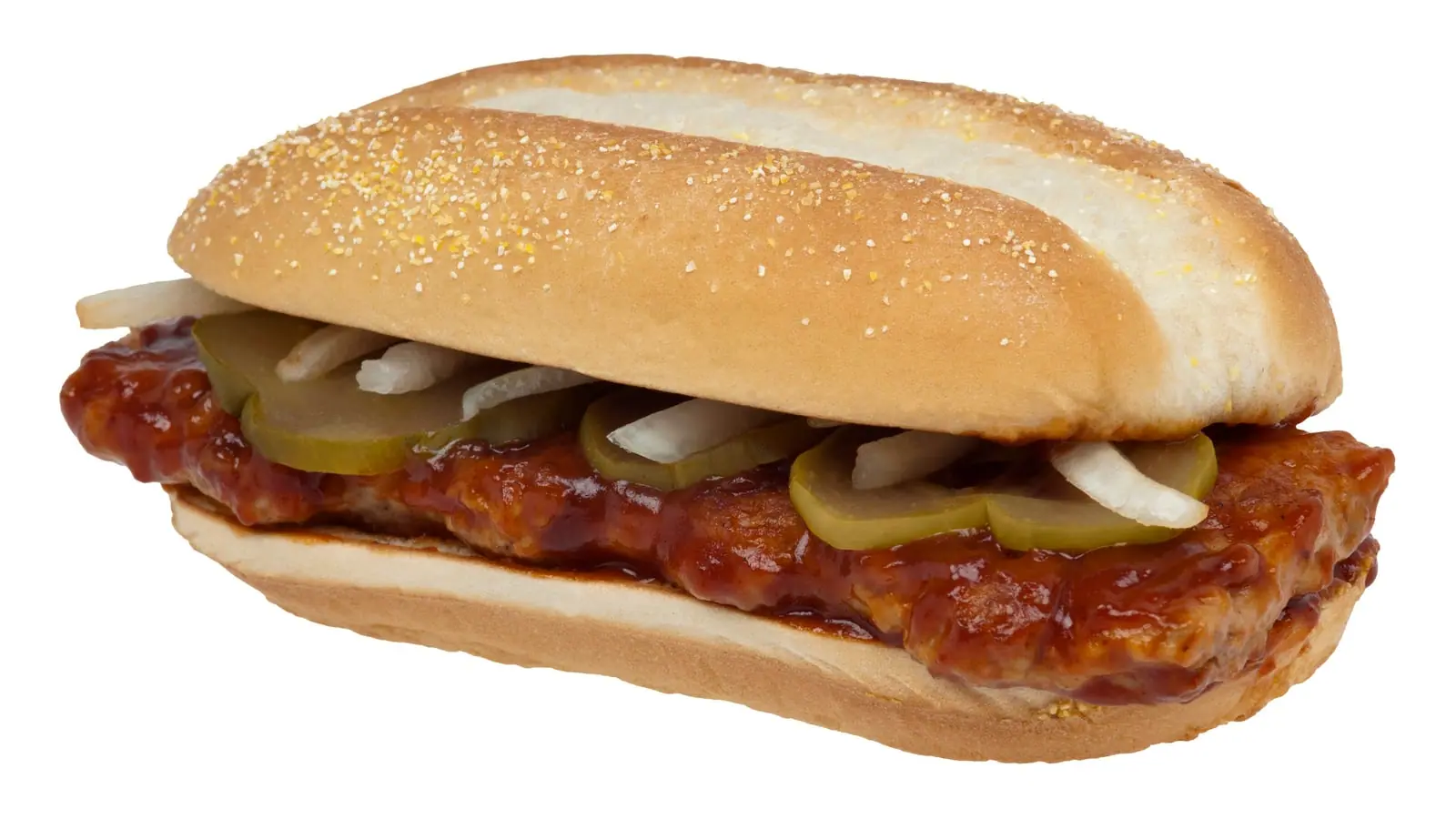
McRib Returns Oct. 27, 2026: Cities, Dates and Calories
The McRib is back at McDonald's on Oct. 27, 2026, but only in select cities. Where to find it, when it returns, what's in it and McRib calories, explained.
Kayem Recall: 1.58M Pounds of Hot Dogs, Bacon, Deli Meat
Kayem Foods recalled about 1.58 million pounds of hot dogs, bacon, sausage and deli meat over storage temperature problems. Brands, codes and what to do.