Brazil Election 2026: Lula Wins a Historic Fourth Term
Lula beat Flávio Bolsonaro 51.79% to 48.21% in Brazil's Oct. 25 runoff. See the results, the voting-hours dispute, and what happens before Jan. 5.

The short answer
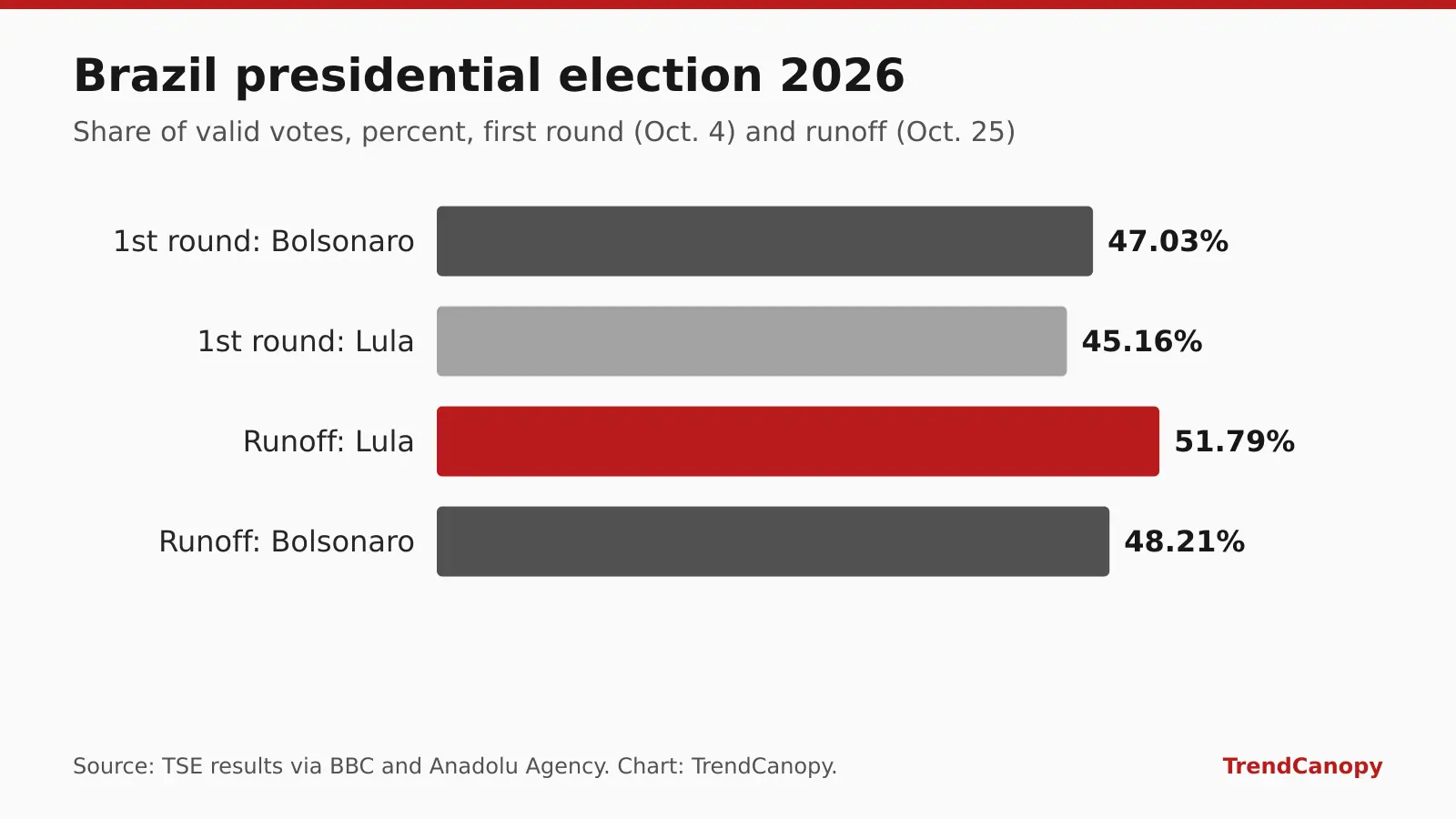
Brazilian President Luiz Inácio Lula da Silva won the Oct. 25, 2026, runoff with 51.79% of valid votes to 48.21% for Senator Flávio Bolsonaro, a margin of about 4.4 million votes, according to Brazil's Superior Electoral Court (TSE). Lula becomes the first Brazilian president elected to a fourth term. Bolsonaro has not accepted the result and is challenging a two-hour voting extension, but the court's president said the extension did not change the outcome. The new term starts Jan. 5, 2027.
Key takeaways
- Result: Lula 51.79%, Flávio Bolsonaro 48.21%, a gap of about 4.4 million votes (TSE figures via BBC).
- Comeback: Bolsonaro led the Oct. 4 first round 47.03% to 45.16%, per Anadolu Agency.
- History: Lula is the first Brazilian president to win a fourth term, and the first since 1985 to win after losing the first round, the BBC reports.
- Dispute: Bolsonaro objects to a court order that extended voting by two hours; about 35,500 votes were cast after 5 p.m., according to TSE data cited by Brazilian media.
- Next: Inauguration moves to Jan. 5, 2027, under a 2021 constitutional amendment.
In this article
Luiz Inácio Lula da Silva has won Brazil's presidential runoff and a fourth term, completing a comeback after trailing in the first round. Brazil's Superior Electoral Court (TSE) declared the 80-year-old leftist the winner on Sunday night, Oct. 25, 2026, over right-wing Senator Flávio Bolsonaro, the son of former President Jair Bolsonaro. The result was the top story on Google News on Monday, Oct. 26. This article sticks to the official results and what each side has said, without taking sides.
What we know: the results
With all polling stations counted, Lula received 51.79% of valid votes and Bolsonaro 48.21%, according to TSE figures reported by the BBC. That is a margin of about 4.4 million votes, out of roughly 124 million valid votes. Official, station-level results are published on the TSE results site.
| Round | Date | Lula | Flávio Bolsonaro |
|---|---|---|---|
| First round | Oct. 4, 2026 | 45.16% | 47.03% |
| Runoff | Oct. 25, 2026 | 51.79% (about 64.2 million votes) | 48.21% (about 59.8 million votes) |
Sources: first round, Anadolu Agency; runoff, TSE figures via the BBC and Portal O Norte.
Why it is historic
- First fourth term. Lula previously served two terms from January 2003 to December 2010 and a third starting in January 2023. The BBC reports he is the first president in Brazil's history to win a fourth term.
- First comeback of its kind. He is also the first president since Brazil's return to civilian rule in 1985 to be elected after losing the first round, according to the BBC. In the Oct. 4 vote, Bolsonaro finished ahead, 47.03% to 45.16%.
- Age. Lula turns 81 on Tuesday, Oct. 27, the BBC notes. The new term runs four years.
In his victory speech, Lula told supporters his win was a "loss for negativity, lies," and added, "long live democracy," the BBC reported. World leaders congratulated him on Monday.
The dispute over extended voting hours
Bolsonaro has not recognized the result. His objection centers on an unprecedented order by Supreme Court Justice Cristiano Zanin to extend voting nationwide by two hours, until 7 p.m. Brasília time, at polling stations that were still operating. Some of Bolsonaro's supporters point out that Zanin was once Lula's lawyer.
Here are the facts both sides agree on, based on reporting by the BBC and Brazilian outlets:
- Both campaigns asked for more time. Lula's campaign cited a lack of buses for voters in São Paulo and Bahia. Bolsonaro's campaign cited heavy rain and asked for extensions in municipalities in Minas Gerais, Rio Grande do Sul, Paraná, Santa Catarina and São Paulo, according to Portal O Norte.
- The number of late votes was small. TSE data cited by the same outlet show 35,521 votes were recorded after 5 p.m., compared with a winning margin of about 4.4 million.
- The court's view. TSE President Kássio Nunes Marques, who was appointed by Jair Bolsonaro, confirmed Lula's victory and said the extension did not change the outcome, the BBC reported.
On Sunday night, Bolsonaro said he would seek to annul the election. By Monday, Brazilian news site R7 reported that he had dropped the annulment plan after advisers pointed to legal obstacles and would instead file an electoral case accusing Lula's ticket of abuse of economic and political power. In a video posted Monday, Bolsonaro criticized Zanin's decision and said its impact needed to be "clarified." No court has ruled on any new filing.
Why Americans are searching for it
Brazil's runoff led Google News' top stories on Oct. 26. American readers searched for the result, for the identity of Flávio Bolsonaro, and for an explanation of the voting-hours fight, which drew comparisons in coverage to Jair Bolsonaro's own refusal to accept defeat. As the BBC put it, the son's rejection "comes as no surprise to observers. His father did the same." With the U.S. midterm elections a week away and Israel voting on Oct. 27, it is a busy stretch for election news around the world.
What the institutions have said
- TSE President Kássio Nunes Marques said after the result that he had "total confidence in the electoral process," according to Portal O Norte, which also reported that officials at both courts privately acknowledged the two courts had handled the voting-hours episode imperfectly.
- Supreme Court President Edson Fachin stressed the importance of respecting the will of voters, Estadão reported.
- Transport problems behind Lula's request included reduced bus fleets, missing vehicles and improper fare charges in some cities, according to Portal O Norte.
What's next
- Any legal challenge. If Bolsonaro files a case alleging abuse of power, it would go to Brazil's electoral courts. According to the Estadão newspaper, justices on the TSE and the Supreme Court privately see no basis to annul the vote. That is reporting on their views, not a ruling.
- Certification and transition. The TSE has already proclaimed the result. The government's transition into the new term follows over the next two months.
- A new inauguration date. Lula will be sworn in on Jan. 5, 2027, not Jan. 1. As g1 explains, Constitutional Amendment 111, passed in 2021, moved the date, and this is the first time it applies. State governors take office on Jan. 6.
- Governing. The BBC notes the new term begins amid significant constraints at home after a bitter campaign, including a divided electorate.
The bottom line
Lula won Brazil's runoff by about 3.6 percentage points after trailing in the first round, becoming the country's first four-term president. His opponent is contesting the result, focusing on a two-hour voting extension that both campaigns had requested and that court officials say did not affect the outcome. For more world and U.S. headlines, visit our News section, or read about the record Four Corners flooding in the American Southwest.
Frequently asked questions
- Who won Brazil's 2026 presidential election?
- Luiz Inácio Lula da Silva won the Oct. 25, 2026, runoff with 51.79% of valid votes, defeating Flávio Bolsonaro, who received 48.21%, according to Brazil's Superior Electoral Court.
- When does Lula's new term begin?
- On Jan. 5, 2027. A 2021 constitutional amendment moved Brazil's presidential inauguration from Jan. 1 to Jan. 5, and 2027 is the first time the new date applies. The term runs four years.
- Why is Flávio Bolsonaro challenging the result?
- He objects to a Supreme Court justice's order that extended voting by two hours at polling stations that were still open. Both campaigns had asked for extensions because of transport problems and heavy rain. TSE data cited by Brazilian media show about 35,521 votes were cast after 5 p.m., far fewer than the 4.4 million-vote margin.
- How many times has Lula been president?
- This is his fourth term. He served from January 2003 to December 2010 and again from January 2023, and his new term begins Jan. 5, 2027.
Sources
- Brazil election: Lula wins fourth term in dramatic comeback over Bolsonaro · BBC News, Oct. 26, 2026
- Resultados das eleições 2026 (official results) · Tribunal Superior Eleitoral (TSE)
- Morning Briefing: Oct. 26, 2026 · Anadolu Agency, Oct. 26, 2026
- Lula é reeleito: quando será a posse presidencial em 2027? · g1 (Globo), Oct. 25, 2026
- TSE avalia que pedido de Flávio Bolsonaro para anular eleição não deve avançar · Portal O Norte, Oct. 26, 2026
- Ministros do STF e do TSE não veem chance de Flávio Bolsonaro conseguir anular eleições · Estadão, Oct. 26, 2026
- Flávio Bolsonaro desiste de pedir anulação da eleição e mira cassação da chapa de Lula · R7, Oct. 26, 2026

About the author
Editorial team
The TrendCanopy editorial team researches what Americans are searching for, checks the facts against primary sources and publishes clear, sourced explainers.
Spotted an error? Read our corrections policy or contact us. Last reviewed October 26, 2026.
Related stories
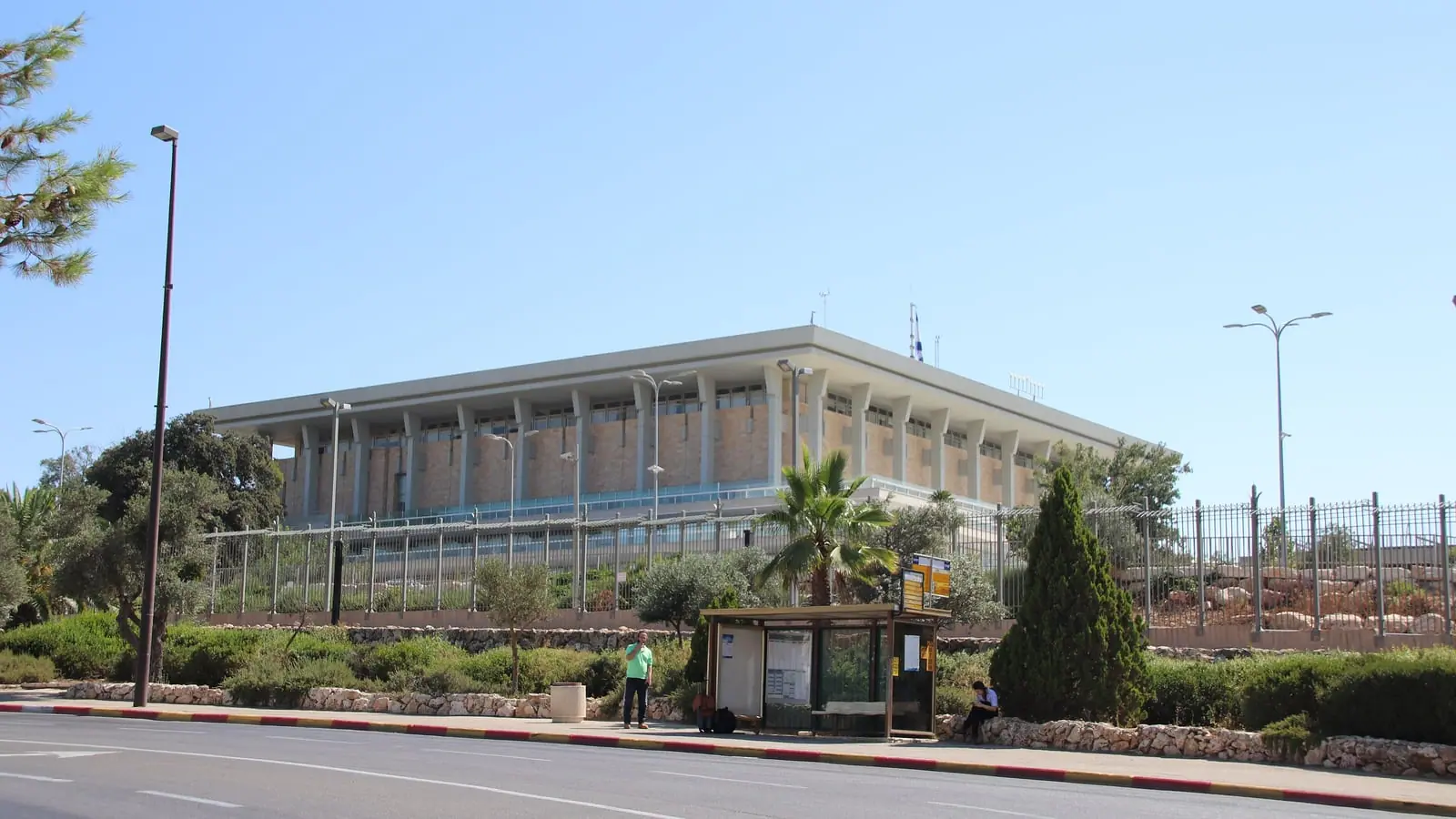
Israel Election 2026: Polls, Parties and When Results Come
Israel votes Oct. 27 for a 120-seat Knesset. What the final polls show, the 61-seat math, the 3.25% threshold and when to expect exit polls in U.S. time.
2026 Midterms: Early Voting, Key Dates and the Ballot
Election Day is Nov. 3, 2026. See what's on the ballot, how many Americans have voted early, how to check your registration and when results arrive.

mRNA Melanoma Vaccine Cuts Recurrence Risk 42% in Trial
Merck and Moderna's personalized mRNA therapy, intismeran, cut melanoma recurrence or death by 42% in a Phase 3 trial. What the data show and what's next.